The Five Thrones
Five stages every woman moves between — psychological, and lived. This is the map underneath everything we do.
Five thrones, one throne room.
Picture a woman's life as a room with five thrones in it: Princess, Warrior, Lover, Magician, Queen. She doesn't leave one behind when she reaches the next — she carries all five, and at any given point one of them is the throne she's actually ruling from.
That's why growth so rarely feels linear. A woman can be a Magician at work and a Princess at home. She can reach the Queen's throne and find the Warrior still running her marriage. If one throne is unstable — a war never finished, a heart never reopened, a vision never given the tools to build it — the whole room feels unsteady, however far she's come.
So the work isn't climbing. It's balance: knowing which throne you're ruling from today, which one is unstable, and what it takes to steady it.
Not invented. Adapted.
The archetypes are old. Carl Jung described them as patterns of the psyche; in 1990 the Jungian analysts Robert Moore and Douglas Gillette mapped four of them — King, Warrior, Magician, Lover — into a model of mature masculinity that has shaped men's development work ever since.
No equivalent was built for women. The Five Thrones is that work: the same archetypal tradition, re-drawn around a woman's life, with the Princess added as the stage that precedes being taken seriously, and the Queen as the sovereignty a King was always assumed to have.
2024: a method is born.
In 2024, authors Nelson and Clinton began asking a question the leadership canon had never properly answered: why do the frameworks built for women's development borrow so heavily from men's — and what would one look like if it didn't?
They found their answer in two lives, three thousand years apart.
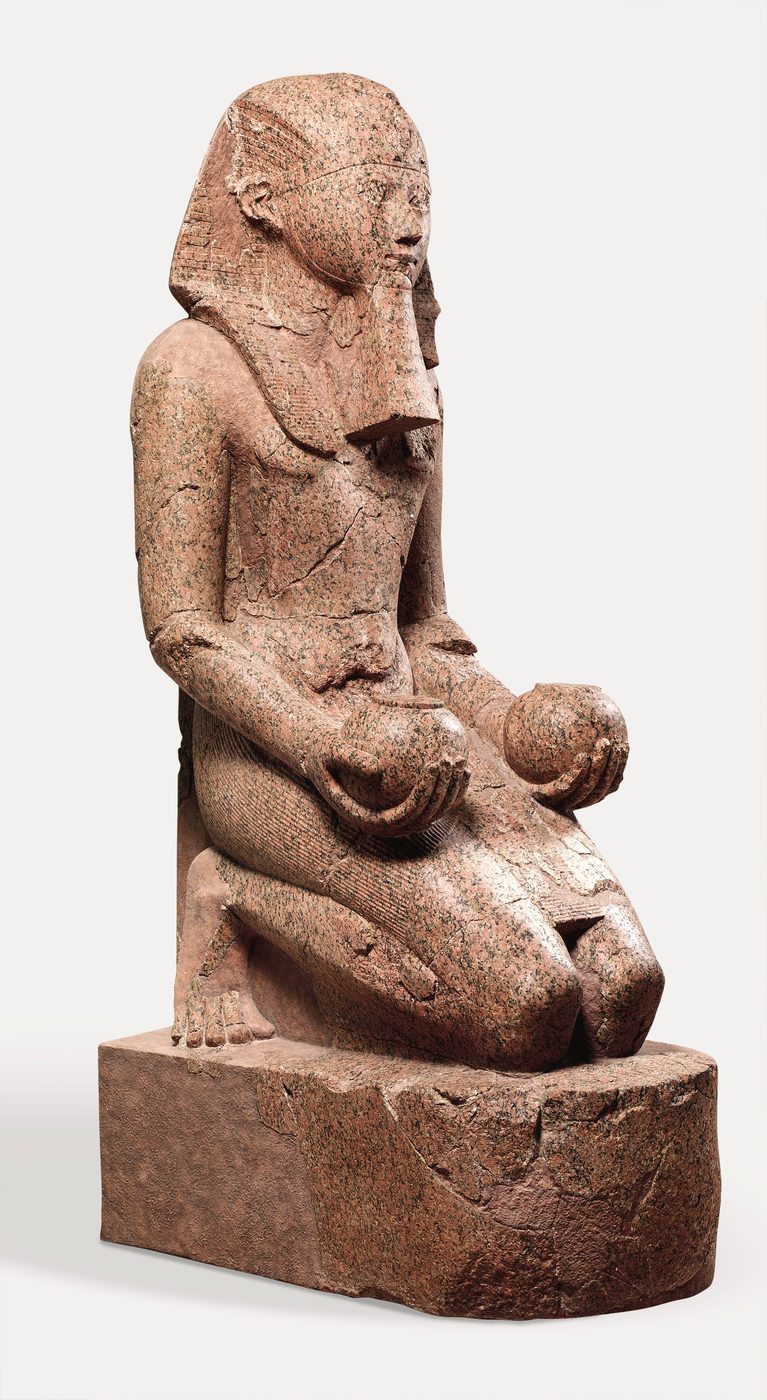
The first was ancient. Hatshepsut ruled Kemet (Egypt) not as a queen consort but as a king in her own right — commissioning temples, leading trade expeditions, having herself depicted with the full regalia of a pharaoh. Before she could rule, she had to be tested. Before she was tested, she was simply a woman whose potential no one had yet been forced to take seriously.
The second was modern, and the pattern was identical. Elizabeth II was untested royalty before she was anything else — a princess, not yet a monarch. Then came the war: she trained as a mechanic and driver in the ATS, one of the few members of her family to serve in uniform. She fought, in the only way the moment allowed her to. Decades of reign followed — devotion to a role that gave everything and asked everything back, judgment sharpened by seventy years of managing people and crises she couldn't always control, and finally a sovereignty so complete that "the Queen" became a description of a position, not just a person.
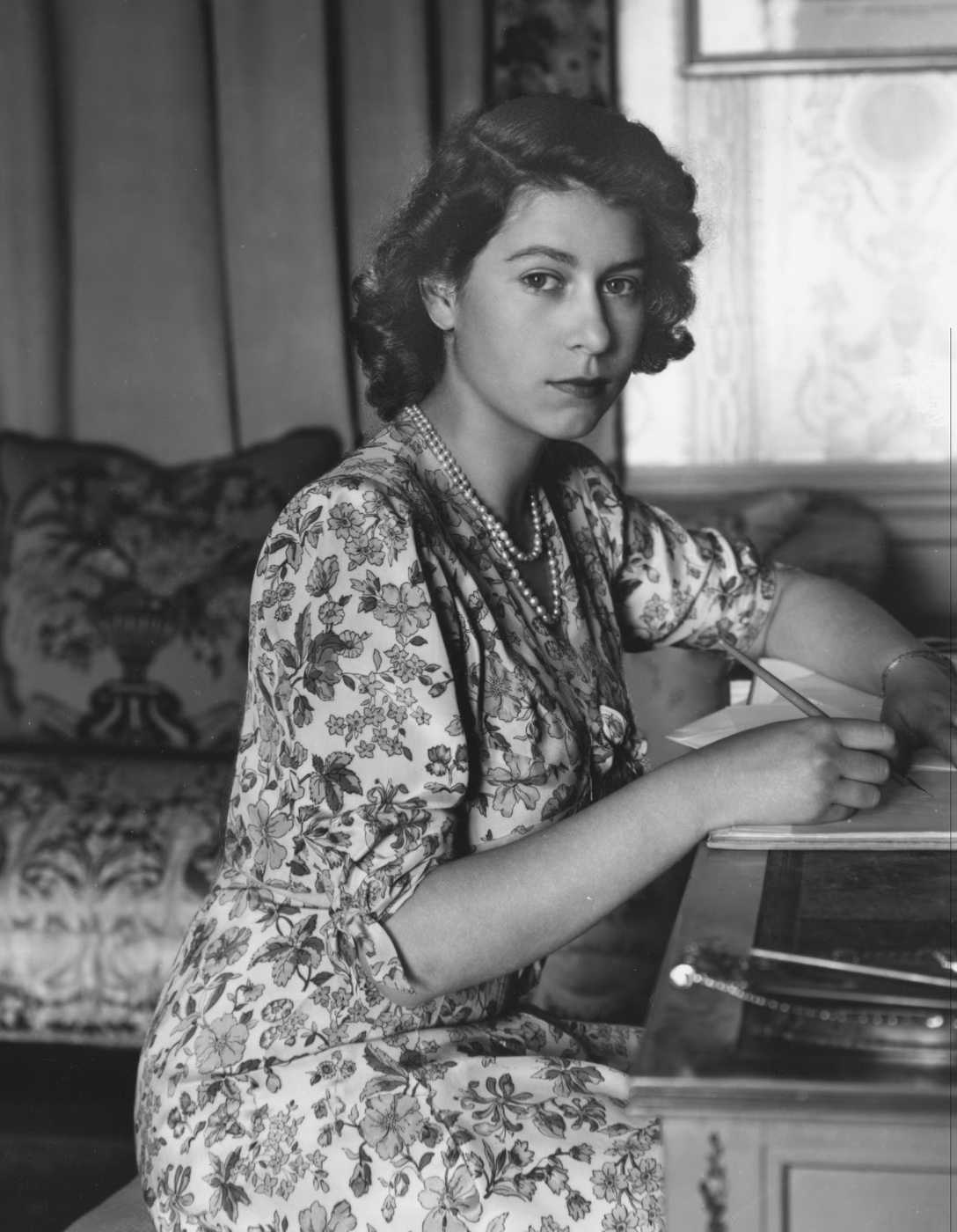
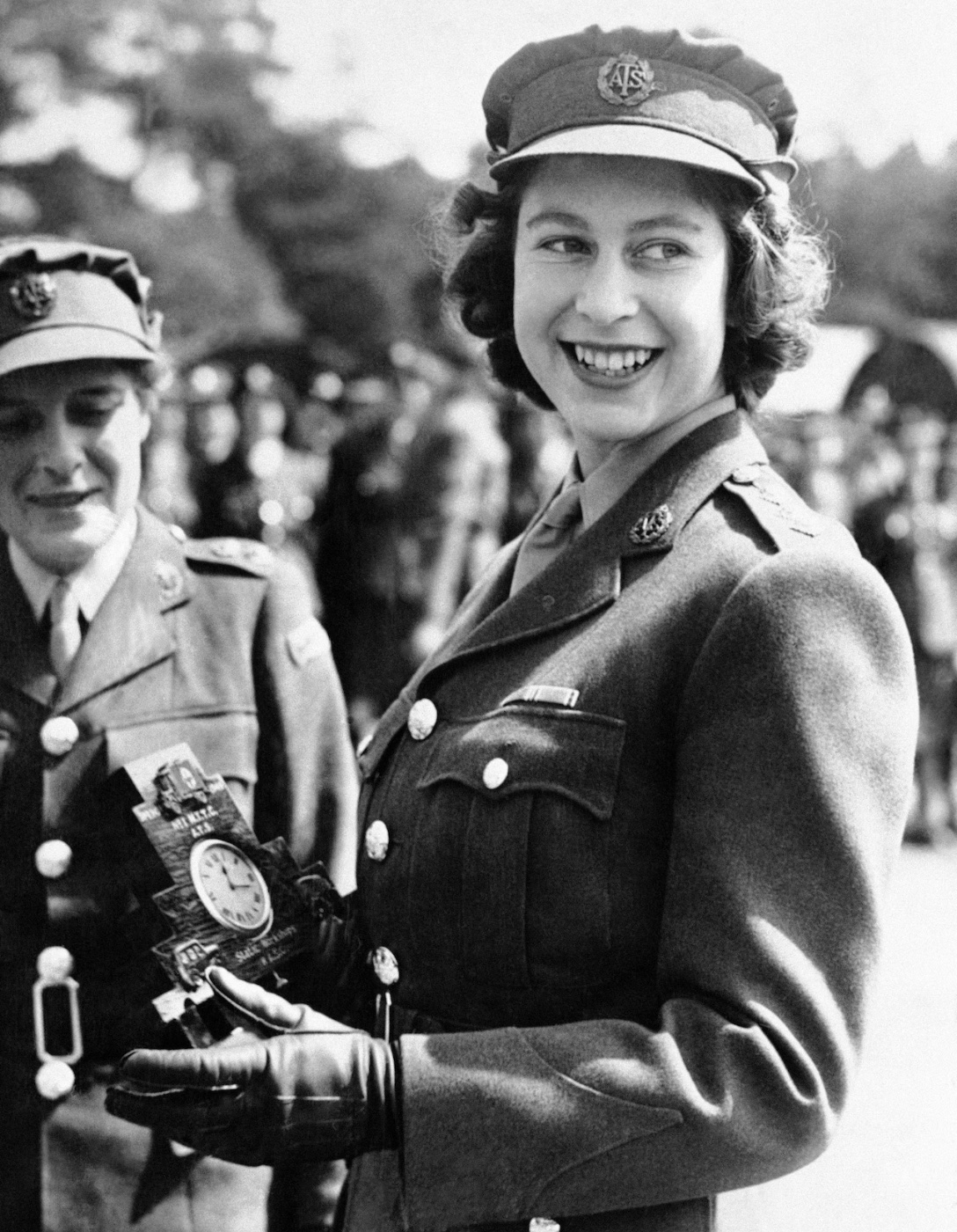
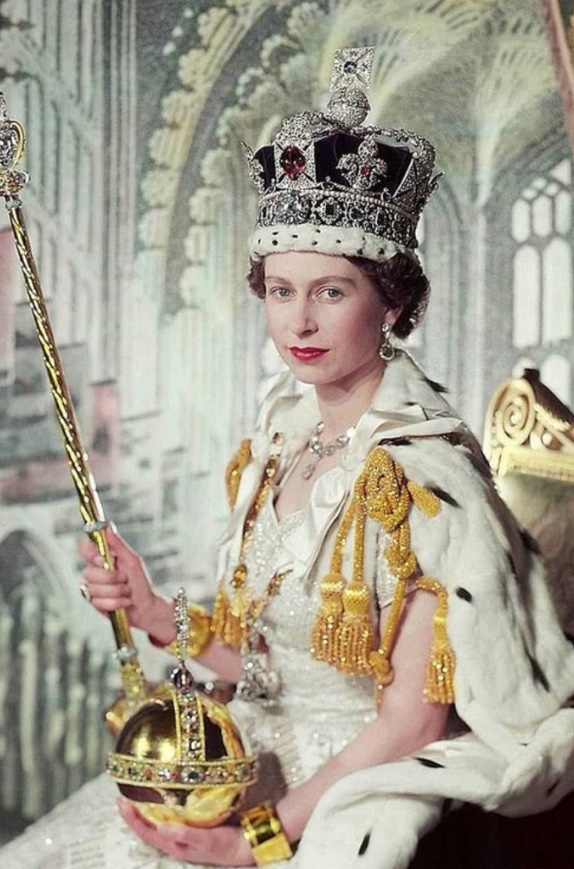
Untested. Tested by conflict. Devoted past the point of return. Building judgment through decades of practice. Ruling, finally, in full command of what she'd built. Nelson and Clinton saw the same five positions in a woman three thousand years dead and a woman most of the world watched live — and then, once they knew what to look for, in the women around them: not a personality, a stage, and never only one at a time.
That became the Five Thrones: not a ladder to climb, but five positions every woman holds at once, one of them always the one she's actually ruling from. The foundation of the Queen Method.
One room, no first seat.
Choose a throne to read it. She holds all five at once — the question is only which one she is ruling from today.
Princess
Potential, not yet proven. She has promise but hasn't been tested — still finding her own shape, before the world hands her someone else's.
She does not need to be rescued. She needs to be taken seriously.
Warrior
Strength, tested by conflict. She fights — for survival, for family, for ground. She's capable of anything, and she can also get stuck here, where fighting stops being a stage and becomes an identity.
Where the journey stalls: many women who went into survival mode never came out. Capable, exhausted, and unsure how to put the sword down without losing everything they fought for.
There are four wars you must win: spiritual, physical, financial, and time. Losing one quietly costs you the rest.
Lover
The heart reopens. She gives — to family, community, work — often until nothing is left for herself. This throne teaches devotion without depletion.
Give everything, and you'll have nothing left to build with. Give from what's full, and you'll never run dry.
Magician
Vision becomes a tool. She sees what could exist and starts building it — where an idea becomes a mechanism that runs without her holding every piece by hand.
She has the vision. This stage gives her the platform.
Queen
Sovereignty. She rules her own kingdom — her income, her time, her name. Not because she arrived, but because the other four thrones are steady enough to govern from.
A crown was never the point. The point was always who is ruling.
At the centre, her own shape.
Before any throne can be ruled from, there's the question underneath all five: who is she when she isn't performing any of them?
Not her role, her title, or the person the last ten years required her to be. The shape she had before the world handed her someone else's — and the one she'd choose now, given the choice. Every programme starts there, because a throne is only as steady as the floor it stands on.
From map to plan.
The framework is only useful if it produces a decision. In practice it runs in three steps.
Assessment
A structured conversation, not a quiz. Which throne is she ruling from, which is unstable, and what does she believe about why.
The plan
One throne at a time. The unstable one first, not the next one up — steadying beats climbing, every time.
Re-assessment
The same map, at the end. Movement you can see, in her words and on the page.